How are grade (A, B, C) cells classified?
There’s a lot of confusion between different grade solar cells. Any deviation is often graded as B, however a correct classification is complicated because there are dozens of different solar cell defects that can occur.
This post is a first attempt to design a classification (A, B, C) of solar cells, and is a summary of a more in-depth report.
1. Grade A solar cells
Grade A cells are simply without any visible defects, and the electrical data are in spec.
The specifications of the cells can be measured with cell testing equipment.
The perfect grade A cell may still have a slight bend of tiny color deviation is permitted.
Below a grade A solar cell. Due to the light the color seems to deviate, but in fact, this is a flawless solar cell:
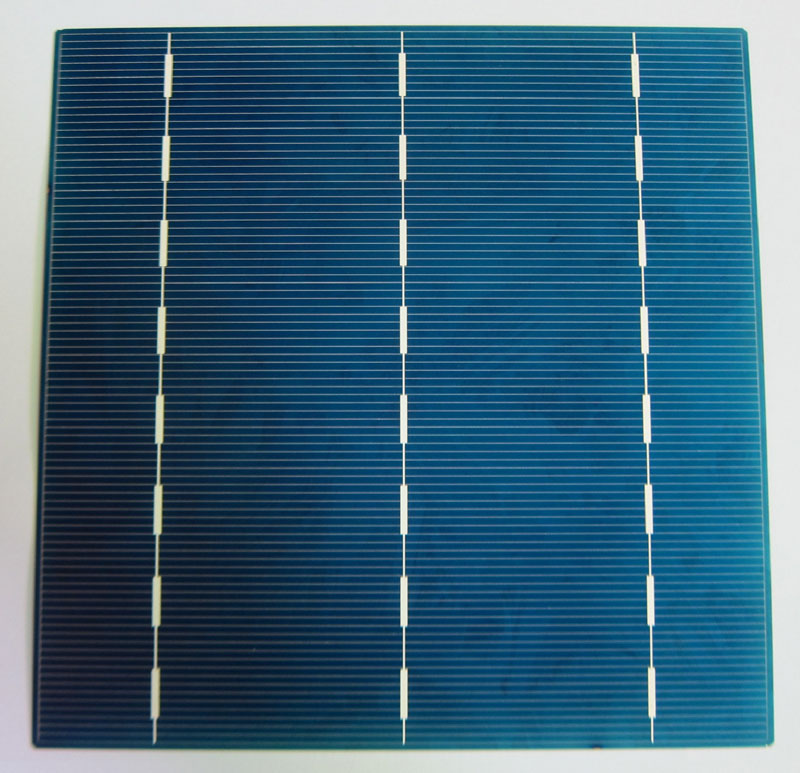
Grade A – solar cell
2. Grade B solar cells
Grade B cells have visible but tiny defects, and the electrical data are in spec.
The following visible defects are common:
- Slight bend of 2.0mm – 2.5mm
- Color deviation, Visible yellow area takes more than 1/4 area of total on the Surface
- Missing prints
- Part of front Busbar missing, missing area ≤ W:0.5mm×L: 5mm
- Paste leakage, for a single area: 0.3mm – ≤2.0mm2
- Scratch, length 15-50mm
- Water marks, L
Here a couple of examples of Grade B solar cells:
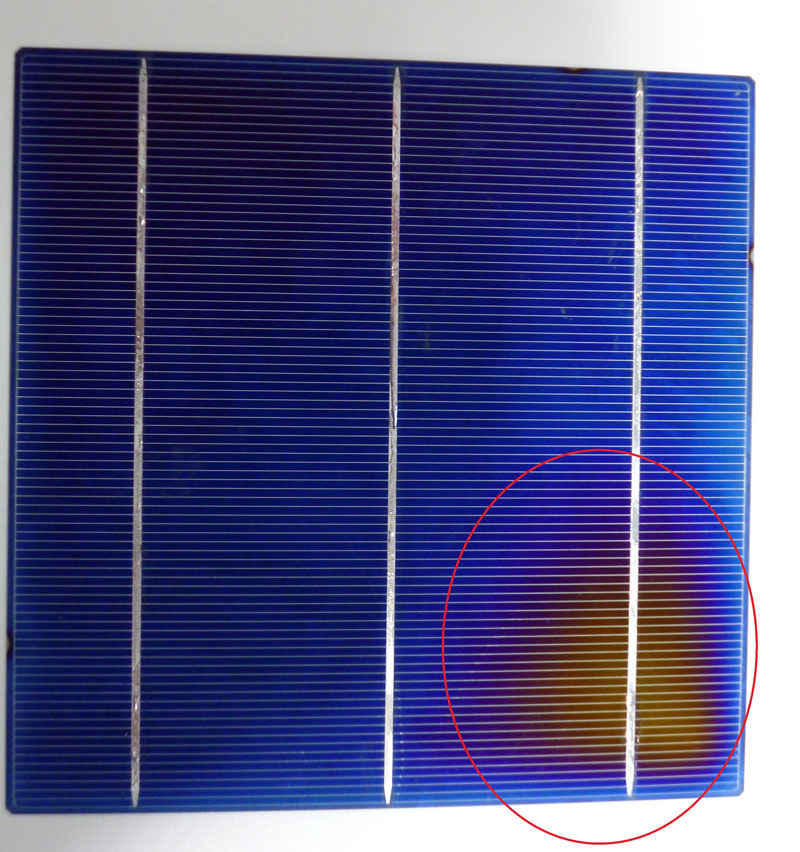
Grade B solar cell – Color Deviation
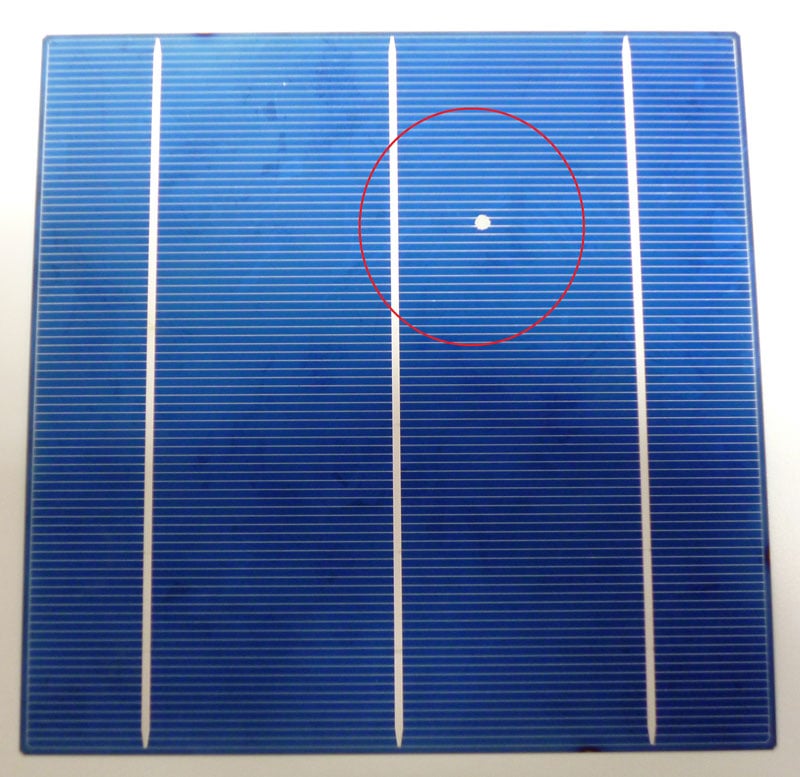
Grade B solar cell – Paste Leakage
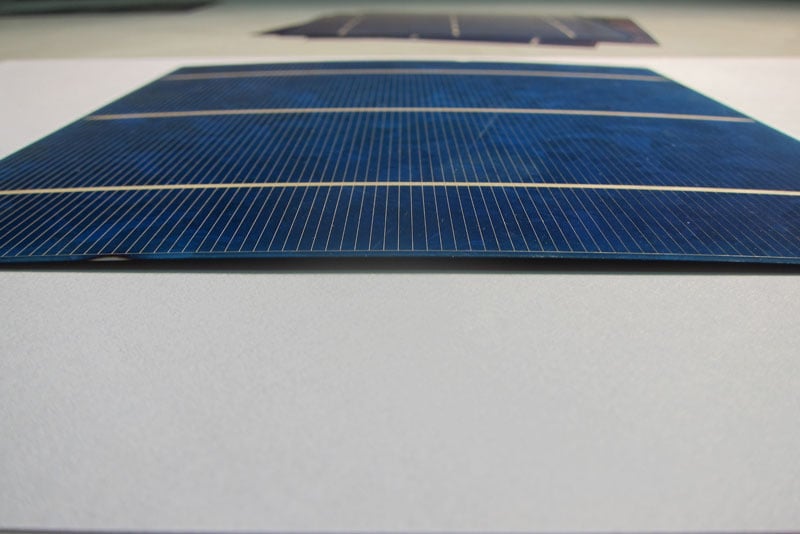
Grade B solar cell – Large Bend
3. Grade C solar cells
A Grade C solar cell has visible defects, and the electrical data are off-spec.
All solar cells with defects worse than Grade B can be classified as Grade C.
Or
A solar cell can be graded as C when the partly broken cell which could be cut into smaller pieces and re-used.
Here are a number of Grade C solar cell examples:
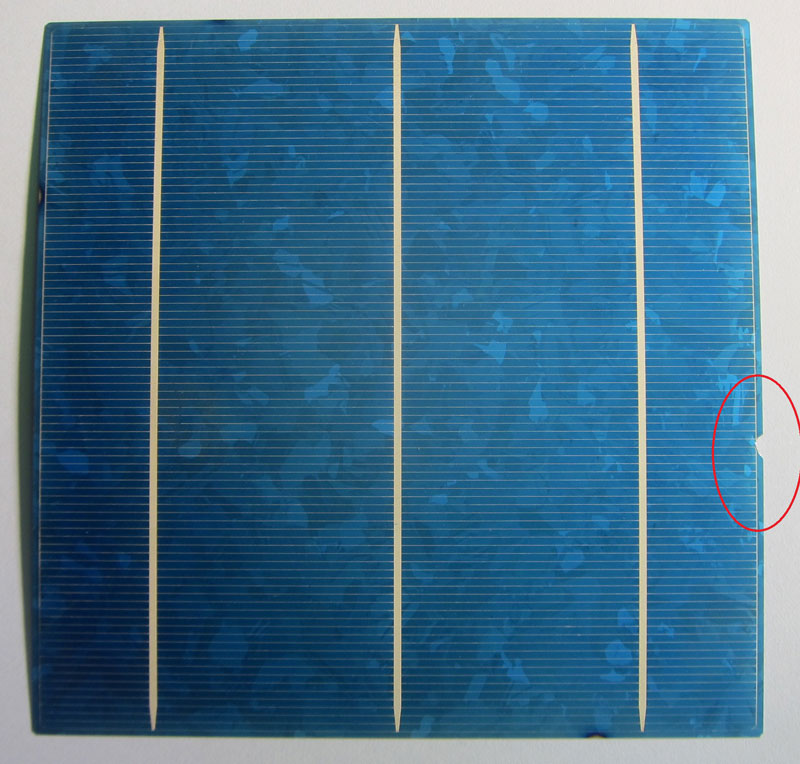
Grade C solar cell – chipped cell
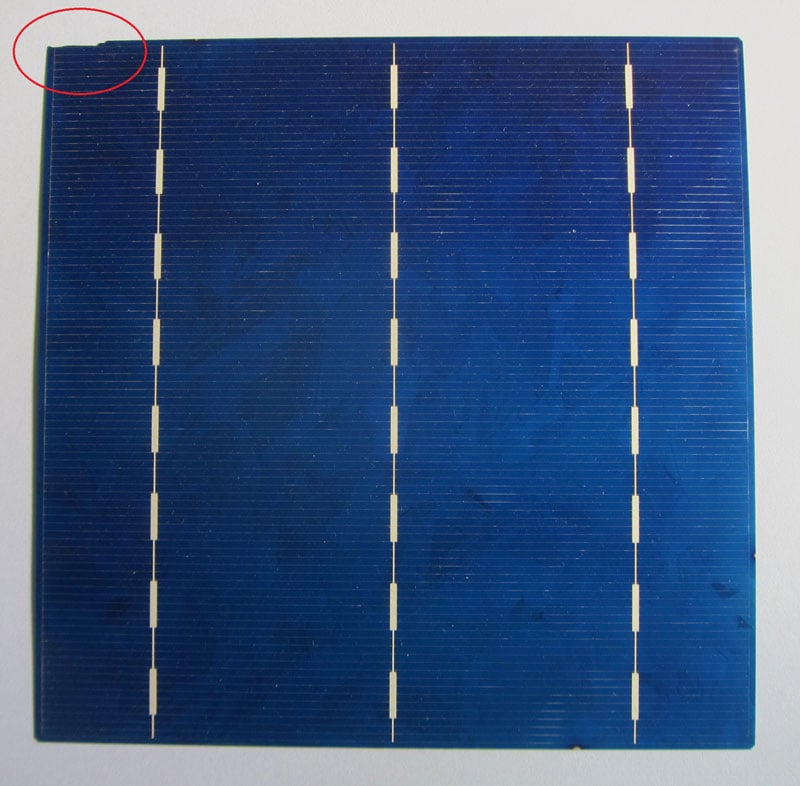
Grade C solar cell – corner breakage
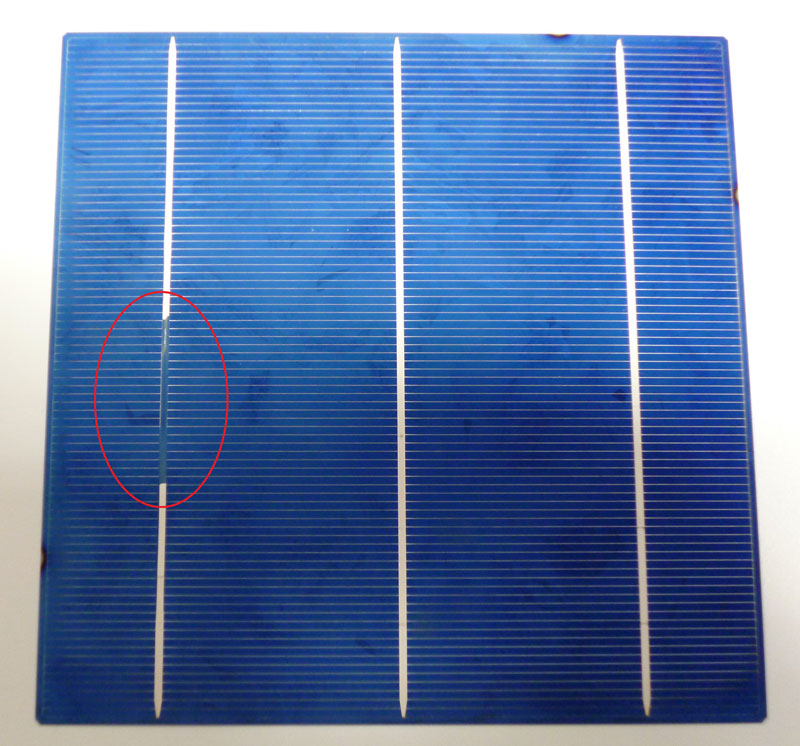
Grade C solar cell – Busbar Missing
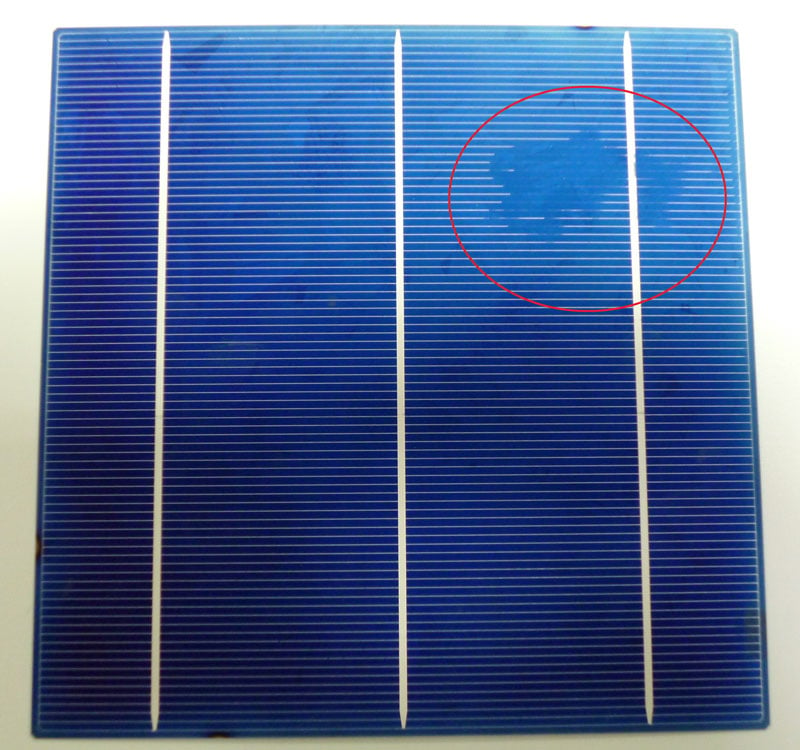
Grade C solar cell – Missing Print


Comments
Post a Comment